A fact file
Official sentences, kept close to their sources
Every fact on this page is taken from an official Met Office, National Hurricane Center or Beaufort page, checked on 17 November 2026.
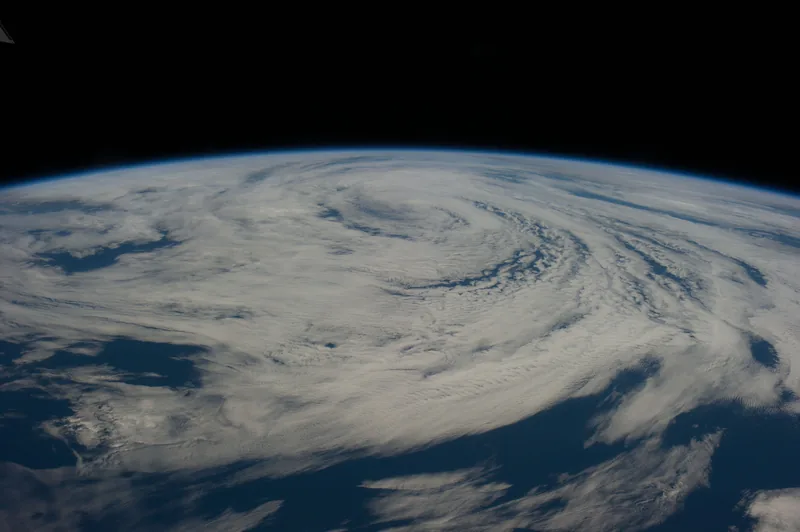
Name our Storms first launched in 2015. ([source])
A new western-group list is published each September. ([source])
That list runs from early September to late August the following year. ([source])
In the UK a storm will be named when it has the potential to cause disruption or damage which could result in an amber or red warning. ([source])
The decision is based on the National Severe Weather Warnings service: a combination of impact and the likelihood of those impacts occurring. ([source])
Storms will usually be named on the basis of the impacts from strong winds. ([source])
Other weather types are also considered, including rain if its impact could lead to flooding as advised by the Environment Agency, SEPA and Natural Resources Wales flood warnings, or snow. ([source])
When the criteria are met, either the Met Office, Met Éireann or KNMI can name a storm, taking the name from the latest list in alphabetical order. ([source])
To stay in line with US National Hurricane Center naming conventions, names beginning with Q, U, X, Y and Z are not included. ([source])
If remnants of a tropical storm or hurricane move across the Atlantic they are referred to as, for example, ex-hurricane Ophelia. ([source])
If that system then reached the criteria for naming a storm in the UK, the name would not change, but it would be known as Storm Ophelia. ([source])
Only names officially designated by the National Weather Service in the US are used in that way. ([source])
The UK, Ireland and the Netherlands work together as the western storm naming group. ([source])
Spain, Portugal, France, Belgium and Luxembourg together make up the south-western storm naming group. ([source])
Norway, Sweden and Denmark are the northern group. ([source])
In the North Atlantic, in the Met Office’s wording about the National Hurricane Center, tropical or subtropical cyclones are named when they are judged to have intensified into a tropical storm with winds of at least 65 km/h (40 mph). ([source])
The 2026–27 names were selected jointly by the Met Office, Met Éireann and KNMI. ([source])
The official announcement of that list is headed “From family tributes to Shaun the Sheep.” ([source])
Storms are named by the group when they have the potential to cause medium or high impacts in the UK, Ireland and the Netherlands. ([source])
That would typically mean an amber or red warning is expected to be issued at some point during the event. ([source])
Austen was put on the 2026–27 list by Met Éireann. ([source])
Boelo was put on the list by KNMI, with the official pronunciation Boo-loh. ([source])
Chloe, Finn, Ivy, Nicola, Ruban, Shaun and Theo were put on the list by the Met Office. ([source])
Dano is a KNMI name, officially pronounced Dah-noh. ([source])
Evelyn, Heather, Kilian, Laoise, Miriam and Phelim were put on the list by Met Éireann. ([source])
Laoise is officially pronounced Lee-sha. ([source])
Phelim is officially pronounced Fay-lim. ([source])
Gwendolyn, Jade, Olaf, Vesna and Wende were put on the list by KNMI. ([source])
Gwendolyn is officially pronounced Gwen-duh-lin. ([source])
Vesna is officially pronounced Vehs-nuh. ([source])
Wende is officially pronounced Vhen-duh. ([source])
The UK Storm Centre, checked on 17 November 2026, recorded Storm Austen as named on 20 October 2026, with a date of impact of 23 October 2026. ([source])
The same table recorded Storm Boelo as named on 22 October 2026, with a date of impact of 24–25 October 2026. ([source])
There isn’t a particular wind speed, rainfall total or central pressure that automatically results in a storm being named. ([source])
Naming is based on the potential for significant disruption and impacts. ([source])
Strong winds are often the main consideration, but heavy rain and significant snowfall can also lead to a storm being named. ([source])
Storm Austen is associated with an area of low pressure forming in the Atlantic, expected to rapidly deepen as it is invigorated by the jet stream. ([source])
On the day Austen was named, a yellow warning for wind had been issued for southern England and south Wales. ([source])
The official blog said gusts in excess of 70mph were possible around the most exposed coasts, with 50–60mph gusts likely more widely within the warning area. ([source])
Potential impacts included travel disruption, power cuts and injuries from debris. ([source])
Rain was an additional hazard, with 20–30mm expected in many places, and higher totals possible over western high ground and farther north on Friday. ([source])
Deputy Chief Forecaster Tom Crabtree said the potential for disruption had resulted in the system being named. ([source])
He added that the exact track and position of Storm Austen was still being determined, and that warnings were under constant review. ([source])
A yellow warning can cover a range of weather scenarios, from likely minor disruption to much more significant impacts with lower confidence. ([source])
A storm may be named while only yellow warnings are in force if there is the potential for disruptive impacts. ([source])
As forecast confidence increases, warning areas and warning levels may be updated accordingly. ([source])
After Storm Goretti in January 2026, post-event surveys suggested that 93% of people within the amber warning area were aware of the warnings. ([source])
The same surveys suggested that 88% of those who were aware took action, such as staying in, not driving and shopping earlier. ([source])
Since 1953, Atlantic tropical storms had been named from lists originated by the National Hurricane Center. ([source])
Those lists are now maintained and updated through a strict procedure by an international committee of the World Meteorological Organization. ([source])
The 2026 Atlantic list is Arthur, Bertha, Cristobal, Dolly, Edouard, Fay, Gonzalo, Hanna, Isaias, Josephine, Kyle, Leah, Marco, Nana, Omar, Paulette, Rene, Sally, Teddy, Vicky, Wilfred. ([source])
The six Atlantic lists are used in rotation and recycled every six years. ([source])
The 2026 Atlantic list will be used again in 2032. ([source])
A name is retired if a storm is so deadly or costly that the future use of its name for a different storm would be inappropriate for reasons of sensitivity. ([source])
If more than twenty-one named tropical cyclones occur in the Atlantic basin in a season, additional storms take names from an alternate list approved by the WMO. ([source])
If a tropical cyclone formed on 28 December, it would take the name from the previous season’s list of names. ([source])
If a storm formed in February, it would be named from the subsequent season’s list of names. ([source])
The Met Office Beaufort scale gives official descriptive terms and wind-speed limits in knots, from 0 Calm (less than 1 knot) to 12 Hurricane (64 knots and above). ([source])
Wave heights on that official scale refer to well-developed wind waves of the open sea. ([source])
To convert knots to mph, the official Beaufort page says, multiply by 1.15; for m/s, multiply by 0.514. ([source])
Force 7 is officially Near gale, 28–33 knots. ([source])
Force 8 is officially Gale, 34–40 knots. ([source])
Force 9 is officially Strong gale, 41–47 knots. ([source])
The official Beaufort page notes that the official term is Strong gale, however the Met Office uses the descriptive term Severe gale. ([source])
Force 10 is officially Storm, 48–55 knots. ([source])
Force 11 is officially Violent storm, 56–63 knots. ([source])
Force 12 is officially Hurricane, 64 knots and above. ([source])
In Met Office marine-forecast warnings, the term used at Force 12 is hurricane force. ([source])
The term hurricane on its own means a true tropical cyclone, not experienced in British waters. ([source])
Force 0 is officially Calm, less than 1 knot. ([source])
Force 1 is officially Light air, 1–3 knots. ([source])
Force 2 is officially Light breeze, 4–6 knots. ([source])
Force 3 is officially Gentle breeze, 7–10 knots. ([source])
Force 4 is officially Moderate breeze, 11–16 knots. ([source])
Force 5 is officially Fresh breeze, 17–21 knots. ([source])
Force 6 is officially Strong breeze, 22–27 knots. ([source])
On this year’s published official pages, the western-group 2026–27 list and the NHC 2026 Atlantic list share no names. ([source])
The 2026–27 western-group list has 21 names, from Austen to Wende. ([source])
The 2026 Atlantic list also has 21 rotating names, from Arthur to Wilfred. ([source])
The UK Storm Centre is the official public home of the western-group naming scheme and its current list. ([source])
Live forecasts and warnings are issued by the official services, not by this site. ([source])
A yellow warning may mean some disruption is likely, such as travel delays in a few places, while allowing many people to continue with their normal activities. ([source])
Yellow can also be used when much more significant impacts are possible, but confidence in exactly where or whether those impacts will occur is lower. ([source])
The official blog’s potential impacts for Austen included travel disruption, power cuts and injuries from debris. ([source])
Jade, Olaf and Wende sit with the other KNMI names on the 2026–27 list. ([source])
Miriam is a Met Éireann name on the 2026–27 list. ([source])
Atlantic names have been in official use, in this form, since lists originated by the National Hurricane Center in 1953. ([source])
The WMO committee maintains and updates the Atlantic lists through a strict procedure. ([source])
Retirement of an Atlantic name is a sensitivity decision about future use, not a measure of wind speed alone. ([source])
The official western-group list for 2026–27 does not include a Q name, a U name, or names in X, Y or Z. ([source])
Shaun is a Met Office name on the jointly selected 2026–27 list. ([source])
Boelo’s official pronunciation is given as Boo-loh on the names announcement. ([source])
Keep exploring
- Sources — the official pages themselves.
- Field notes — the official nuances, gathered in one place.
- Discoveries — the same record, told as stories.
Enjoyed this naming desk?
No pop-ups. No intrusive advertising. Just interesting stuff. A little support helps the next storms site get built.