Myths and the record
What people often think, and what the official pages say
A name is not a number on a gauge, and Force 10’s official name is not a naming threshold.
Myth: A storm is only named when a gale reaches a set wind speed.
The record: There isn’t a particular wind speed, rainfall total or central pressure that automatically results in a storm being named. The official test is the potential for disruption or damage that could result in an amber or red warning.
Myth: A storm can only be named once an amber or red warning is already in force.
The record: Storm Austen was named on 20 October 2026 while a yellow warning for wind was in force. A storm may be named while only yellow warnings are in force if there is the potential for disruptive impacts.
Myth: Yellow always means only minor disruption.
The record: A yellow warning can cover a range of scenarios. It may mean some disruption is likely, or that much more significant impacts are possible but confidence is still lower.
Myth: Storms are named only for wind.
The record: They are usually named for the impacts of strong winds, but rain may count if it could lead to flooding, and snow may count too.
Myth: The Met Office is the only service that can put a name on a storm.
The record: When the criteria are met, the Met Office, Met Éireann or KNMI can name a storm, taking the next name from the list in alphabetical order.
Myth: If a hurricane arrives from the Atlantic, it is given a fresh name from the UK list.
The record: The official method is to keep the name it already has. The Storm Centre’s example is first “ex-hurricane Ophelia,” and then, if the criteria are met, “Storm Ophelia.”
Myth: Shaun the Sheep cannot really be on an official storm list.
The record: The official announcement of the 2026–27 names is headed “From family tributes to Shaun the Sheep.” Shaun is a Met Office name on the jointly selected list.
Myth: There will be a Storm Quentin, or a Storm Ursula, when the alphabet gets that far.
The record: To stay in line with National Hurricane Center conventions, names beginning with Q, U, X, Y and Z are not used. The 2026–27 list ends at Wende.
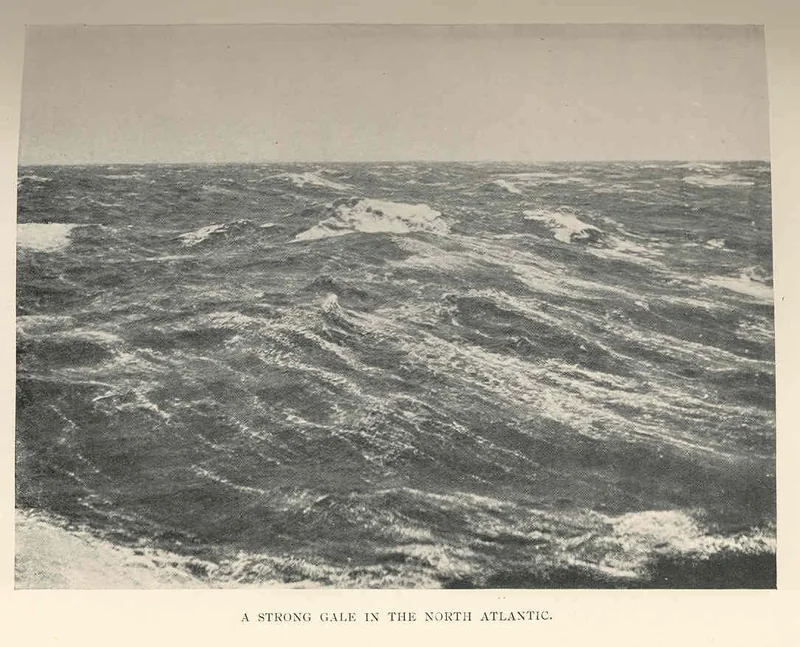
Myth: Force 10 on the Beaufort scale is the official threshold for naming a storm.
The record: Force 10’s official name is “Storm,” but that is a marine-forecast term for a wind of 48–55 knots. It is not the rule that puts a name on a weather system.
Myth: Hurricane, at Force 12, means a tropical cyclone has reached British waters.
The record: On the Beaufort table, Force 12 is printed as “Hurricane.” In warnings the official term is “hurricane force.” “Hurricane” on its own means a true tropical cyclone, not experienced in British waters.
Myth: The 2026 Atlantic names are used only once, and then retired.
The record: The six Atlantic lists rotate and are recycled every six years. The 2026 list will be used again in 2032, unless a particular name is retired because a storm was so deadly or costly that reusing it would be inappropriate.
Myth: If more than 21 Atlantic storms form, naming simply stops.
The record: Any additional storms take names from an official alternate list approved by the WMO.
Keep exploring
- When is a storm named? — the official rule in full.
- The Beaufort scale — where the word Storm already lives.
- The fact file — each official sentence with its source.
Enjoyed this naming desk?
No pop-ups. No intrusive advertising. Just interesting stuff. A little support helps the next storms site get built.